
Questions over how extradition requests are received, transferred and authorised dominated Thursday’s hearing in the case involving U.S. indicted businessman Azruddin Mohamed and his father, Nazar Mohamed.
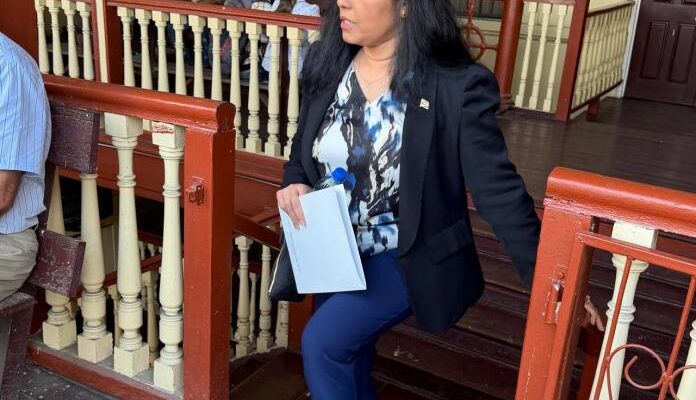
Permanent Secretary of the Ministry of Foreign Affairs and International Cooperation, Sharon Roopchand-Edwards, returned to the witness stand for further cross-examination by defence attorney Siand Dhurjon.
Much of the day was spent examining the handling and transfer of extradition documents.
Roopchand-Edwards outlined what she described as the established channel for receiving and transmitting extradition requests, telling the court that once the Ministry of Foreign Affairs receives such a request, it is forwarded to the Ministry of Home Affairs under longstanding protocols.
She said that if she personally receives the documents, she may deliver them directly to the Minister of Home Affairs. In her absence, the Head of the Legal Department would facilitate the transfer.

According to Roopchand-Edwards, these procedures have been in place for years and are governed by strict confidentiality, given the sensitive nature of extradition matters. She added that if the Head of the Legal Department is unavailable, ministry officials would communicate internally to determine who is authorised to receive the documents. If no competent officer is available, arrangements would be made with the relevant embassy to deliver the documents at another time.
She said the measures are guided by confidentiality protocols, particularly in matters involving extradition, deportation and the confiscation of passports.
Dhurjon questioned whether those protocols were applied consistently in this case, particularly in relation to the timing of the transfer and who was authorised to receive and move the documents.
Several lines of questioning were disallowed by Magistrate Judy Latchman on grounds of relevance.
Before proceedings began, both defence and prosecution attorneys approached the magistrate following a request by defence counsel. Latchman asked Dhurjon whether he had received submissions from the prosecution. He confirmed that he had received them on the evening of Wednesday, Feb. 25, noting that they included, among other things, reference to a paper committal process.
Nazar Mohamed, who had been absent from the previous two hearings due to illness, was present in court on Thursday. When asked whether he would consent to proceedings continuing in his absence if he became unwell, he said he would try his best to attend every hearing going forward.
Azruddin Mohamed and his father, who has been indicted in the United States on several financial crime charges, are each on $150,000 bail pending the conclusion of the matter.
The court will be on leave from March 2 to March 9, 2026. The case was adjourned to March 12.
The post Magistrate hears evidence on extradition protocols in Mohameds’ matter appeared first on News Room Guyana.
