
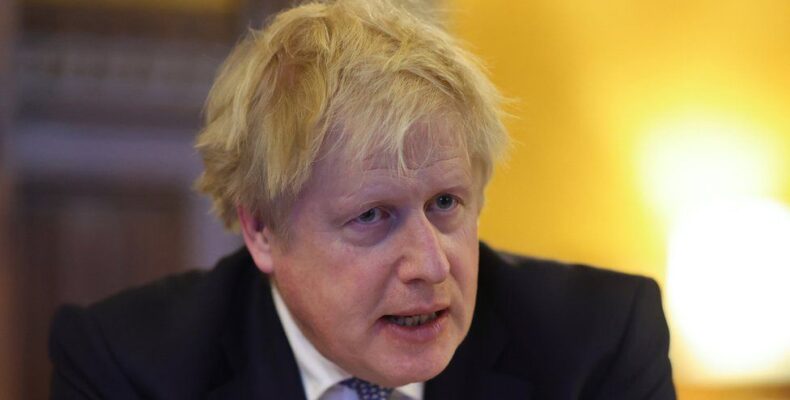
 Scandal-ridden Boris Johnson
Support for Johnson had evaporated during one of the most turbulent 24 hours in recent British political history, epitomised by finance minister, Nadhim Zahawi, who was only appointed to his post on Tuesday, calling on his boss to resign.
Zahawi and other cabinet ministers had gone to Downing Street on Wednesday evening, along with a senior representative of those lawmakers not in government, to tell Johnson the game was up.
Initially, Johnson refused to go and seemed set to dig in, sacking Michael Gove – a member of his top ministerial team who was one of the first to tell him he needed to resign – in a bid to reassert his authority.
One ally had told the Sun newspaper that party rebels would “have to dip their hands in blood” to get rid of Johnson.
But by Thursday morning as a slew of resignations poured in, it became clear his position was untenable.
“This is not sustainable and it will only get worse: for you, for the Conservative Party and most importantly of all the country,” Zahawi said on Twitter. “You must do the right thing and go now.”
Some of those that remained in post, including defence minister Ben Wallace, said they were only doing so because they had an obligation to keep the country safe.
There had been so many ministerial resignations that the government had been facing paralysis. Despite his impending departure, Johnson began appointing ministers to vacant posts.
“It is our duty now to make sure the people of this country have a functioning government,” Michael Ellis, a minister in the Cabinet Office department which oversees the running of government, told parliament.
FROM POPULAR TO DESERTED
The ebullient Johnson came to power nearly three years ago, promising to deliver Brexit and rescue it from the bitter wrangling that followed the 2016 referendum.
Since then, some Conservatives had enthusiastically backed the former journalist and London mayor while others, despite reservations, supported him because he was able to appeal to parts of the electorate that usually rejected their party.
That was borne out in the December 2019 election. But his administration’s combative and often chaotic approach to governing and a series of scandals exhausted the goodwill of many of his lawmakers while opinion polls show he is no longer popular with the public at large.
The recent crisis erupted after lawmaker Chris Pincher, who held a government role involved in pastoral care, was forced to quit over accusations he groped men in a private member’s club.
Johnson had to apologise after it emerged that he was briefed that Pincher had been the subject of previous sexual misconduct complaints before he appointed him. The prime minister said he had forgotten.
This followed months of scandals and missteps, including a damning report into boozy parties at his Downing Street residence and office that broke COVID-19 lockdown rules and saw him fined by police over a gathering for his 56th birthday.
There have also been policy U-turns, an ill-fated defence of a lawmaker who broke lobbying rules, and criticism that he has not done enough to tackle inflation, with many Britons struggling to cope with rising fuel and food prices.
“It should have happened long ago,” Labour’s Starmer said. “He was always unfit for office. He has been responsible for lies, scandal and fraud on an industrial scale.”
