
</p>
<p>” data-medium-file=”https://newsroom.gy/wp-content/uploads/2021/12/Paloma-e1639773203374-300×185.png” data-large-file=”https://newsroom.gy/wp-content/uploads/2021/12/Paloma-e1639773203374-1024×630.png” loading=”lazy” class=”size-large wp-image-130307″ src=”https://newsroom.gy/wp-content/uploads/2021/12/Paloma-e1639773203374-1024×630.png” alt=”” width=”1024″ height=”630″ /><figcaption id=) Vice-Chancellor of the University of Guyana, Professor Paloma Mohamed-Martin (Photo: News Room)
Vice-Chancellor of the University of Guyana, Professor Paloma Mohamed-Martin (Photo: News Room)
“… they should start as early as nursery school because children today are interfaced with technology.”
“They understand it and if you can build a curriculum from very early, I think we will be able to see more,” she explained.
Recognising the need for these skills, the Vice- Chancellor said that UG has been doing its part.
In a bid to pique the interest of children in Science, Technology, Engineering and Mathematics (STEM), UG hosted its first regional accelerator programme recently. This allowed children ages 9-13 from across the region to work in labs at the university for two weeks.
Dr Mohamed-Martin said the programme was held with the hope to “keep them [children] excited by the things we can do in a lab.”
Similar efforts are being engaged in by the Education Ministry.
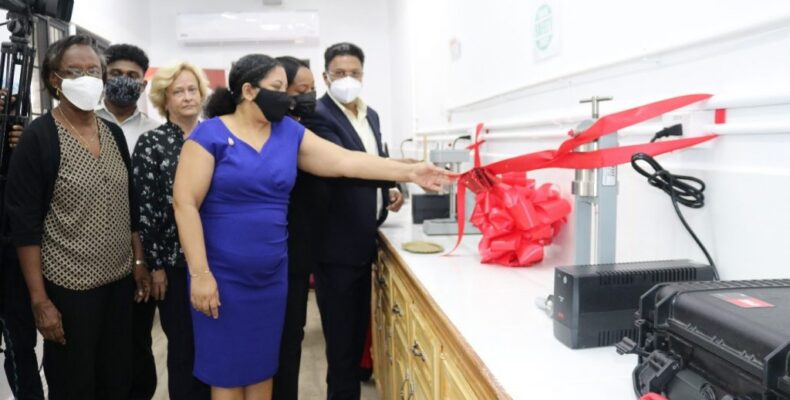
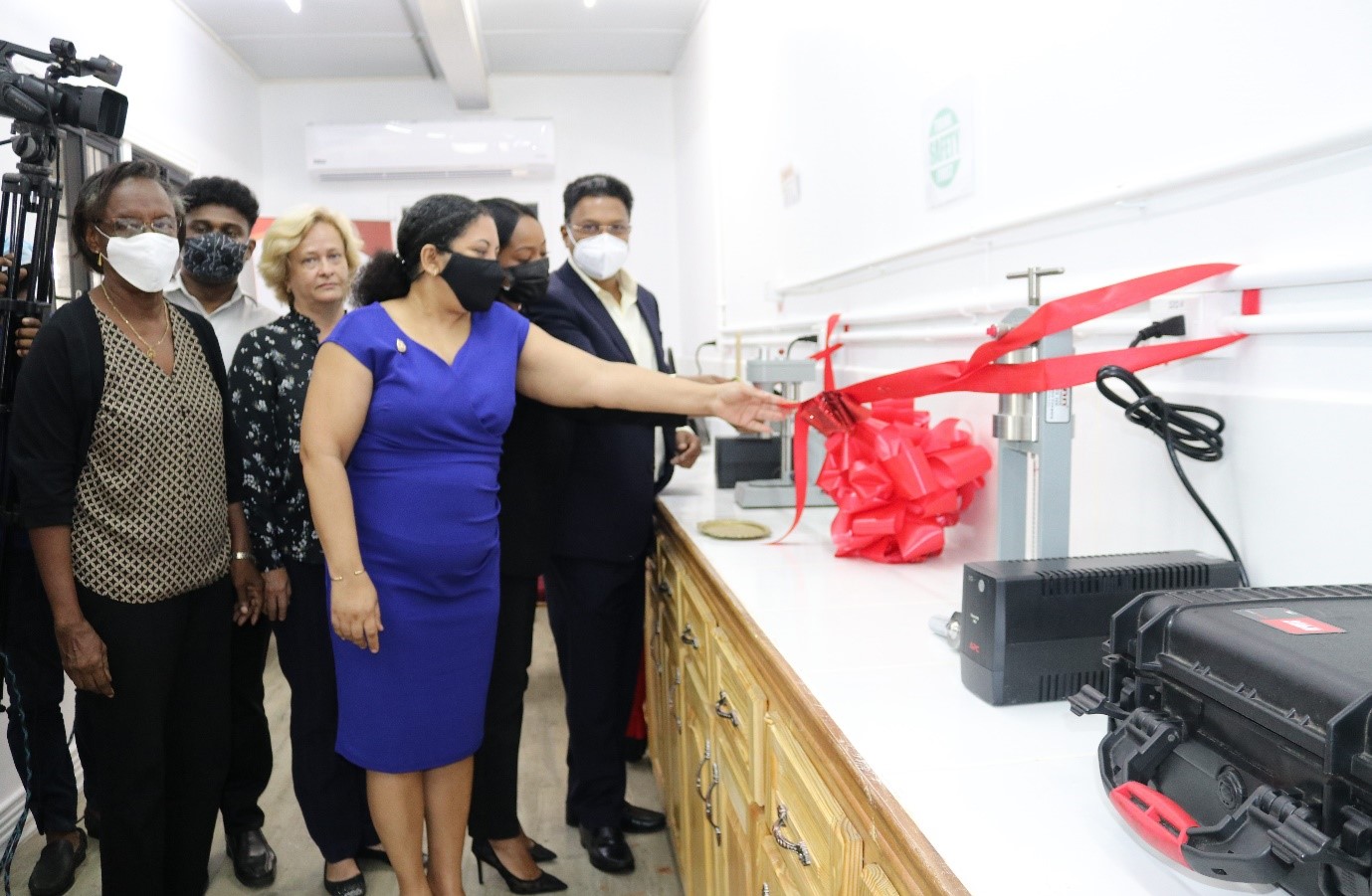
“…the ministry of education will outfit about 30 schools in the hinterland regions that did not have science labs before and that is going to happen by the time school reopens,” the Vice-Chancellor highlighted.
UG EFFORTS
Meanwhile, the Vice-Chancellor also noted that the University is continuously trying to find ways to motivate research and keep learners engaged.
She importantly noted that the capacity of science teachers here is limited but said teacher recruitment is a vital part of developing the system.
 Cardinal Warde, a Barbadian entrepreneur and Professor of Electrical Engineering
Cardinal Warde, a Barbadian entrepreneur and Professor of Electrical Engineering at the Massachusetts Institute of Technology (MIT), during the webinar, also shared that investing in STEM programmes here can propel the country to attain a first-world education system.
He said reforming the educational system by creating STEM based teaching will give learners an early start in this field.
However, teaching alone cannot suffice because jobs have to be created for persons to use the skills attained.
“You need a robust economic educational system and to build technology companies or bring them in,” the professor said. This will open doors for employment for scientists and engineers therefore generating reasons for them to stay here.
