
</p>
<p>” data-medium-file=”https://newsroom.gy/wp-content/uploads/2022/07/frank-web-300×196.jpg” data-large-file=”https://newsroom.gy/wp-content/uploads/2022/07/frank-web.jpg” loading=”lazy” class=”size-full wp-image-146435″ src=”https://newsroom.gy/wp-content/uploads/2022/07/frank-web.jpg” alt=”” width=”903″ height=”590″ /><figcaption id=) Minister of Health Dr Frank Anthony (Photo: News Room/July 12, 2022)
Minister of Health Dr Frank Anthony (Photo: News Room/July 12, 2022)
Dr. Anthony along with Head of the National AIDS Programme Secretariat (NAPS) Dr. Tariq Jagnarine told the News Room that their comfort is in the quality of treatment being offered locally while also agreeing that the tests are important to track progress individually and nationally.
Guyana also committed to ensuring that 95 per cent of those living with HIV would know their status and 95 per cent of those who know their status to be on treatment by 2030.
But Dr. Jagnarine has noted that international guidelines no longer recommend CD4 testing as a means of tracking the success of treatment in individuals.
“While we are not doing away totally with it, we will focus on newly infected cases,” Dr. Jagnarine noted while pointing to human resource and equipment shortfalls in the system to conduct these tests.
“We have issues with the lab. We have an old machine but we are buying a new one this year,” Dr. Jagnarine said during a telephone interview.
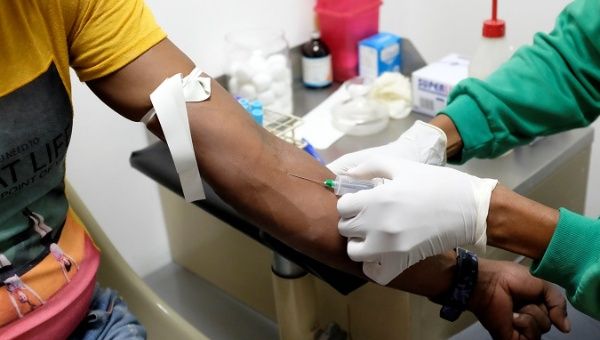
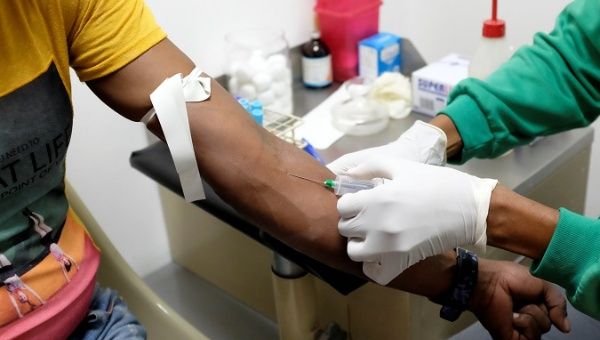
He said these challenges have also reduced viral load testing to merely emergency cases, possibly where an HIV+ person becomes really sick that the test becomes absolutely necessary.
 National AIDS Programme Secretariat – Programme Manager Dr. Tariq Jagnarine.
“A lot has to do with COVID, human resources and lab resources.
“We need the test to be done, the good thing why I am not too worried is because we offer excellent treatment. We have started TLD treatment and that helps to achieve rapid viral load suppression and fewer side effects add longevity and we have slowly transitioned all our patients to it,” Dr. Jagnarine explained.
TLD is a fixed-dose combination medication—three ARV drugs that clients take once a day for treatment of HIV/AIDS, but in the form of a single, smaller tablet.
Dr. Jagnarine said very soon, routine viral load tests will recommence once the technical issue in the laboratory process is sorted.
In the meantime, persons living with HIV remain unsettled that the services are not available through the public system although some private institutions offer the tests, sometimes at prices many cannot afford.
The latest figures project that there are over 9, 000 persons living with HIV in Guyana.
