
For decades, West Indies cricket has wrestled with a recurring, deeply frustrating conundrum: how do you capture the raw, unvarnished talent found on the region’s streets and successfully shepherd it into a professional pipeline?
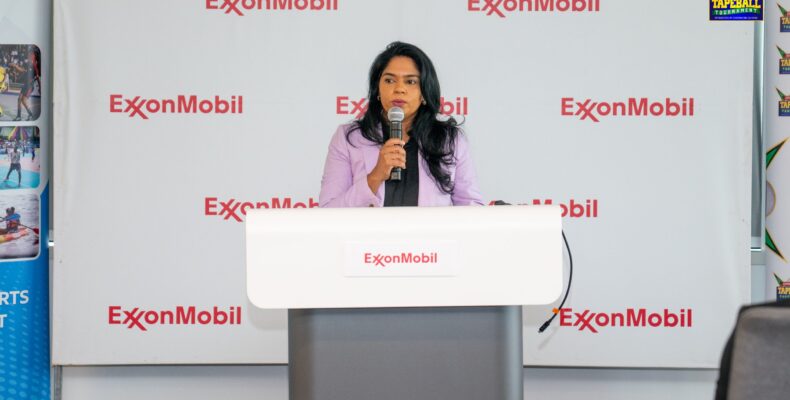
In Guyana, the answer is being built from the ground up, quite literally, within the primary school system. On Wednesday, the fourth edition of the Future Warriors Tapeball Tournament was officially launched at ExxonMobil’s headquarters in Ogle.
What began as a modest local knockout competition has blossomed into a sweeping, multi-county pathway spanning Demerara, Berbice, and Essequibo. A total of 48 teams—16 from each zone—will compete in a tournament designed specifically to eliminate the financial hurdles that so often derail promising young Caribbean athletes before they have even laced up a pair of boots.
To ensure a level playing field, the tournament organisers have removed all financial barriers. Everything from playing kits and bats to meals and transport is fully funded by the joint venture between ExxonMobil Guyana and FL Sport.
The format is unashamedly modern: a high-octane, eight-overs-a-side knockout competition. In a progressive twist, teams also have the flexibility to field mixed-gender XIs, intentionally integrating boys and girls on the same turf from a foundational level.
Speaking at the launch, Minister of Education Sonia Parag highlighted the crucial link between grassroots sport and character building.
“Sport is so critical to the development of our young people,” Parag said. “It is not just about the runs scored, but about developing the discipline and leadership that will serve these children well beyond the cricket boundary.”

It is a sentiment echoed by Alistair Routledge, President of ExxonMobil Guyana, who stressed the energy company’s commitment to creating sustainable social pathways for youth.
“We also want to be a part of the fabric of this community, and I love sport because of how it brings people together,” Routledge explained. “I love to see the energy and the passion of these young players, and seeing the partnership working so beautifully to lift up the next generation is incredibly rewarding.”
Meanwhile, Director of Sport Steve Ninvalle praised the tournament’s continuity, noting that structured school cricket remains vital for feeding talent into the national framework and that private-sector and government support is critical.
The government, through the Ministry of Culture, Youth and Sport, has made the National Stadiums accessible for matches.
“I would like to commend the organisers for their vision,” Ninvalle stated. “Maintaining this level of consistency is exactly what our sports ecosystem needs, and we look forward to seeing how these young players progress into the future.”

Yet, the tournament’s modernising ambitions extend well beyond the boundary rope. While regional winners will take home comprehensive equipment bags for their schools, the top four teams in each zone will also receive tablets.
The goal is distinctly analytical: teaching children the digital mechanics of online match scoring, fusing technology with play to cultivate an early understanding of modern cricket metrics.
To bridge the gap between aspiration and reality, active national cricketers are also being deployed across the tournament as team mentors, providing pupils with direct access to elite role models who can guide them through the tactical nuances of the game.
John Ramsingh, Co-Director of FL Sport, expressed immense confidence that this fourth cycle would solidify the tournament’s reputation as a vital scouting ground.
“We remain committed to ensuring that this is not just a one-off weekend of cricket,” Ramsingh told the launch. “The ultimate objective is to ensure standout performers do not simply disappear after the final ball is bowled, but are instead funnelled directly into established local clubs and regional academies. Let’s give these young players a round of applause for what they are about to achieve.”
The logistics will see the tournament test three of the country’s premium venues over consecutive weekends, with play commencing at 09:00h local time each day.
The Demerara Zone gets underway on May 30-31 at the National Stadium in Providence, before moving to the historic Albion Sports Complex for the Berbice leg on June 13-14. The regional qualifiers will conclude in Essequibo on June 20-21 at the Anna Regina National Stadium.
The incoming crop of schools will be chasing the high standards set during the previous national finals, where Berbice’s Cropper Primary produced a tactically clinical display against Demerara’s Grove Primary and Essequibo’s C.V. Nunes to claim the ‘Champion of Champions’ title.
This year’s regional winners will earn an automatic berth to the national postseason, with the showpiece ‘Champion of Champions’ leg scheduled for the August-September window.
The post ExxonMobil Guyana recommits to youth development with fourth Future Warriors Primary School Tapeball tournament appeared first on News Room Guyana.
